
Mt. Morgan (South) — Oct. 31–Nov. 1
Last year, I tried to do a late season summit bivy of Mt. Morgan South but had to bail a couple hundred feet below the summit due to deep, fresh snow from an early storm. The snow line started around 12500 ft but was consistently 5+ ft deep at the higher elevations. Better prepared this time, I slept on the summit was rewarded with both sunset and sunrise views from up high.
There had been some early season storms in prior weeks and I couldn’t tell from satellite imaging whether the snow was deep enough to warrant snowshoes. Out of an abundance of caution, I begrudgingly brought them with me. It had been a couple of weeks since my last foray into the Sierra which meant my body wasn’t all that acclimated to the elevation. The first three miles from the trailhead to Francis Lake went by slower than I would have liked — about 2.5 hours with a half hour break halfway up. From Francis Lake, it looked like there wasn’t much snow on the upper slopes of the mountain. I would’ve liked to ditch the snowshoes here and return for them on my way down, but decided to make the decision higher up when I had a better idea of the snow quality. At least the snow brought good news: I wouldn’t have to carry 4+ liters of water up to the summit. There was more than enough snow for me to melt up there.
Francis Lake lies at an elevation of 10900 ft while the summit of Mt. Morgan South is an excruciating 2800 ft of the lake. This wasn’t my first time doing this route with an overnight pack so I knew I could mentally divide this ascent into several manageable sections:
The sand and scree slopes from Francis Lake to the talus fields at ~11920 ft.
The rising traverse along combination scree and talus (mostly scree if navigating correctly) to the northwest “ridge” at ~12600 ft.
The straightforward talus hopping to the wide plateau at ~13120 ft.
The steep final push to the summit!
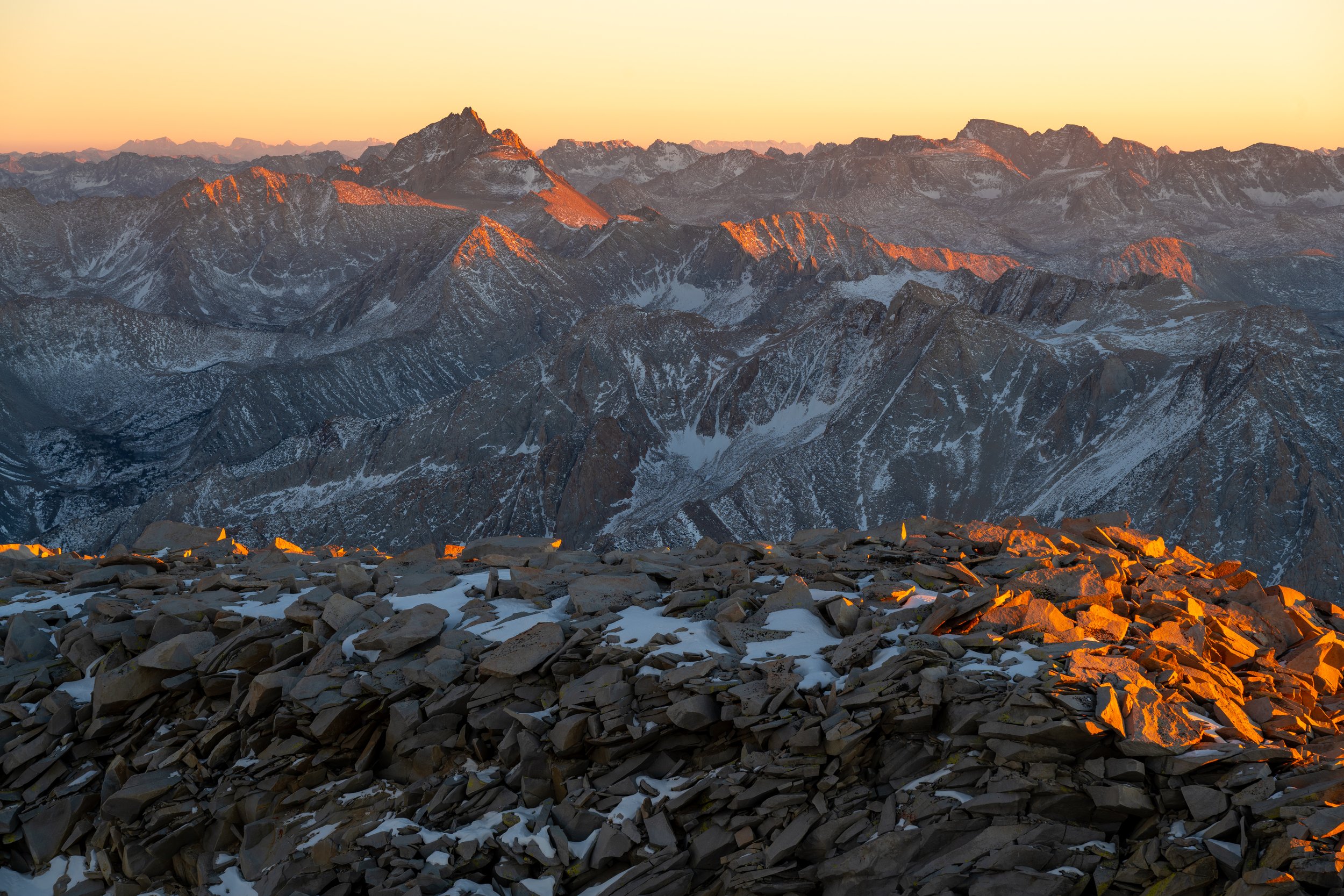
Sunset looking south from Mt. Morgan South.
I took short breaks after each of these sections and overall felt great by the time I reached the summit. The only hiccup was being a bit dehydrated which led to a pounding headache that lasted all night, but I had an appetite and was able to mostly get in all of the calories I had packed.
Sunset was vibrant and I was able to get great photos looking south towards Mt. Humphreys. After the evening chores of melting snow for water and making sure all of my electronics were in my sleeping bag with me, I turned in early. Sleep was fitful and I don’t think I slept continuously for more than a couple of hours at a time, but I did collectively get around nine hours of sleep. I had completely forgotten Daylight Savings Time would fall on this Saturday and nearly missed sunrise when I set an alarm based on the previous day’s sunrise time; thankfully, I had woken up naturally around 5:45AM and noticed how bright it already was.
Sunrise was an absolutely phenomenal affair. The colors were a bit more muted this time of year but watching first light hit the high peaks of the Sierra never fails to put me in a great mood. I listened to the Chicago Symphony Orchestra’s rendition of Respighi’s Fountains of Rome on my phone which only furthered my exuberant mood.


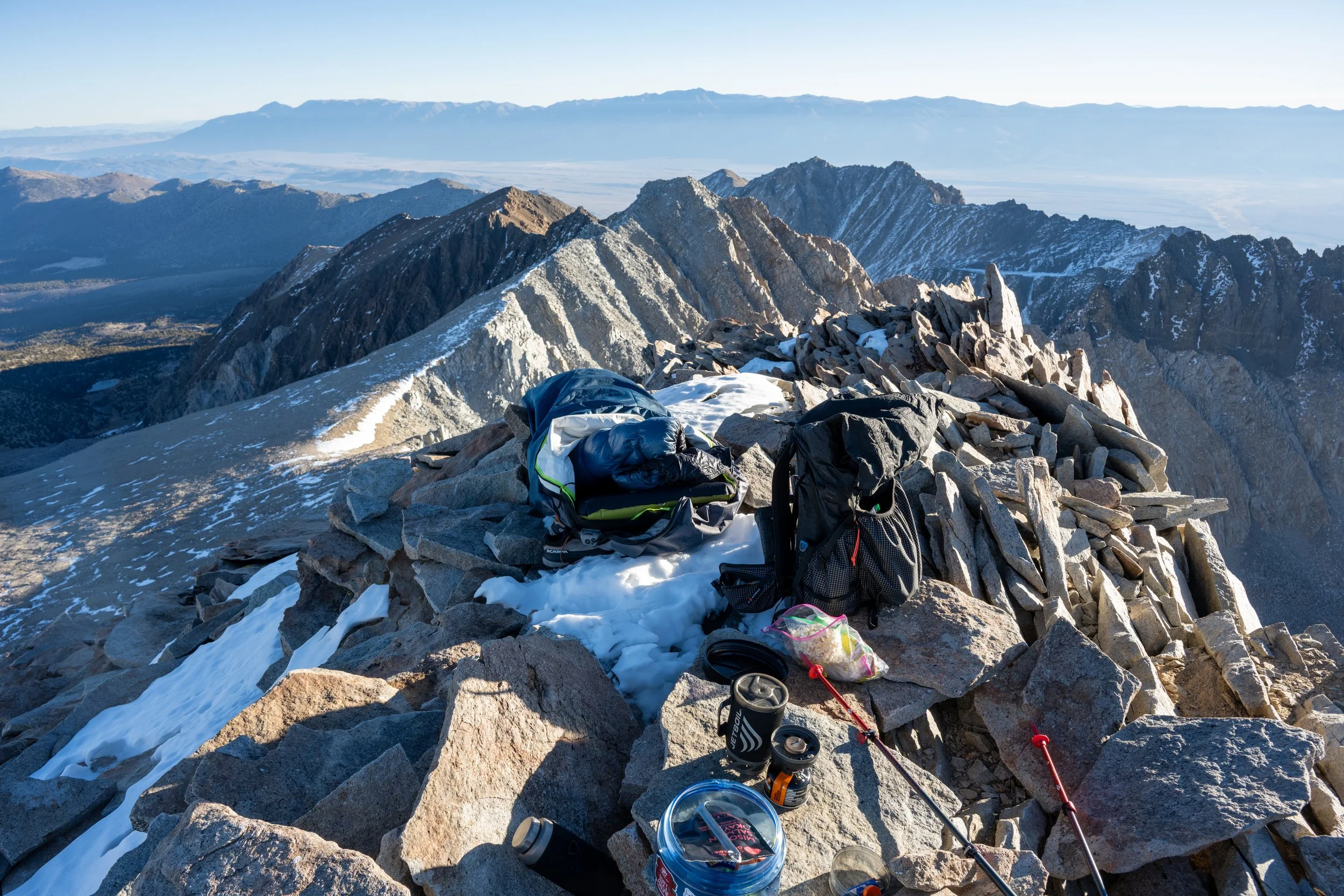
The descent was a leisurely affair. The only true talus hopping on this route is on the last ~500 ft of the summit block. My knees were very thankful for the plentiful scree on the remainder of the route. I saw absolutely no other hikers on the Francis and Tamarack Lakes trails and only ran into a group of three older day hikers closer to the trailhead. These autumn days are getting shorter and colder now. The roads are slowly entering their winter closures and the fair-weather hikers have most disappeared, but these late season experiences are the ones I’ll cherish the most.
—Justin
