
Chasing the dream shot in Yosemite — April 22, 2026
Lately, I’ve become something of a bad-weather hiker, only visiting Yosemite during or in the immediate aftermath of a storm. The cloud and fog conditions are superb if one is lucky enough to catch them dancing around the park’s famed granite walls. For awhile now, I’ve had the idea to try photographing Yosemite valley from above with fresh snow and fog clinging to the valley floor at sunrise. Conditions lined up perfectly in the last full week of April and I found myself taking off work midweek to make this trip happen.
All of Windy’s forecast models suggested snow would fall over the Sierra from April 20-22 so I was quite certain the snow component of my planned shot would work out. The only question was when the storm would break. Low clouds and fog tend to only form in the valley when the temperature and dew point are equal and fairly low. During a storm, thick clouds at all elevations obscure any views. Too long after a storm and the precipitation evaporates, taking with it any chance of clouds forming. The hotspot, in my experience, is in the immediate aftermath of a storm while the ground is still saturated from rain and the snow hasn’t begun to melt off the mountains and trees yet.
By April 21, it became obvious to me that the storm would break that night, leading to a temporary clearing in the high clouds the next morning. All forecast models were in agreement even if NWS’s interpretation of the model runs suggested rain/snow all evening and morning. Hopefully, I’d have the fog component of the shot nailed down too.
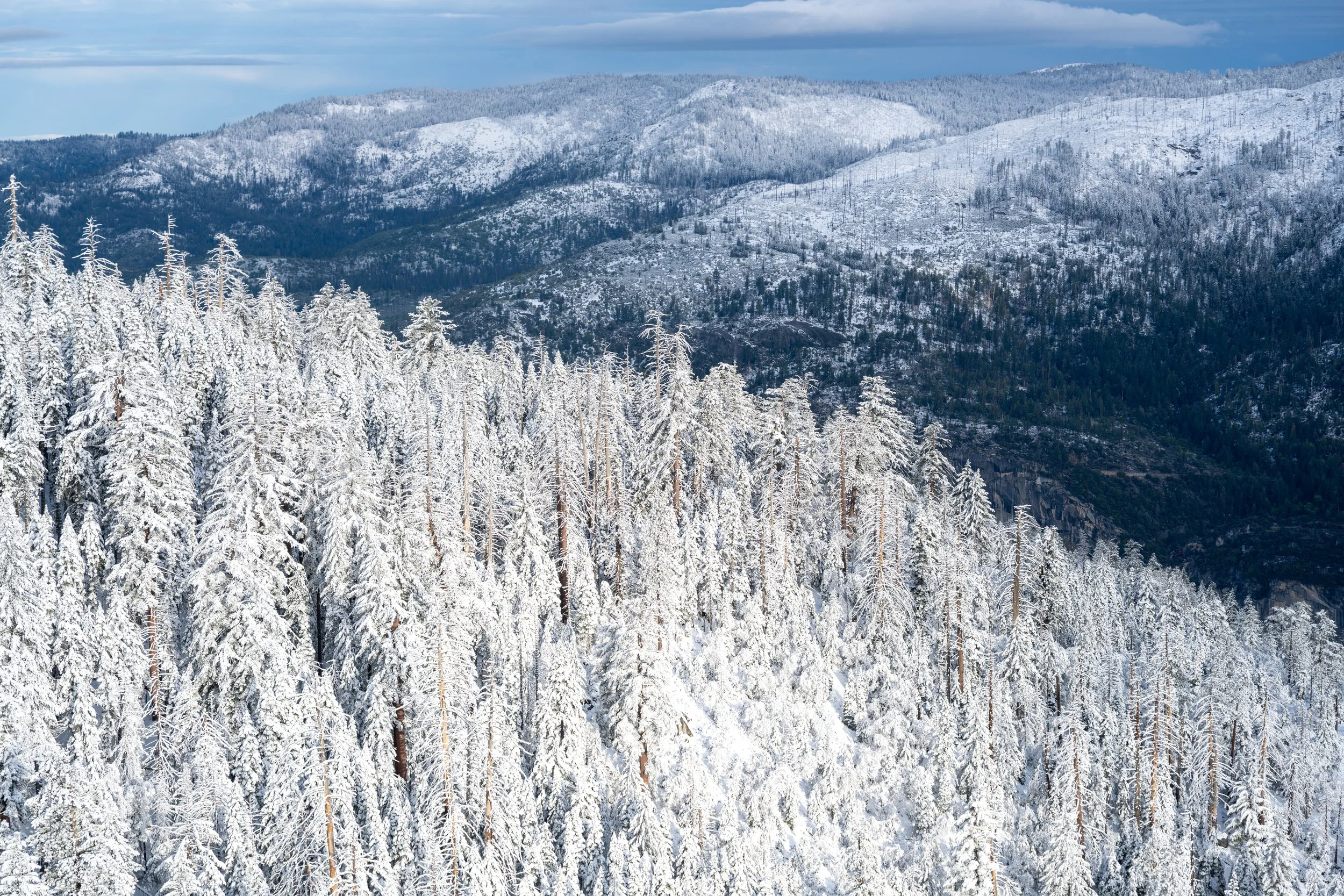
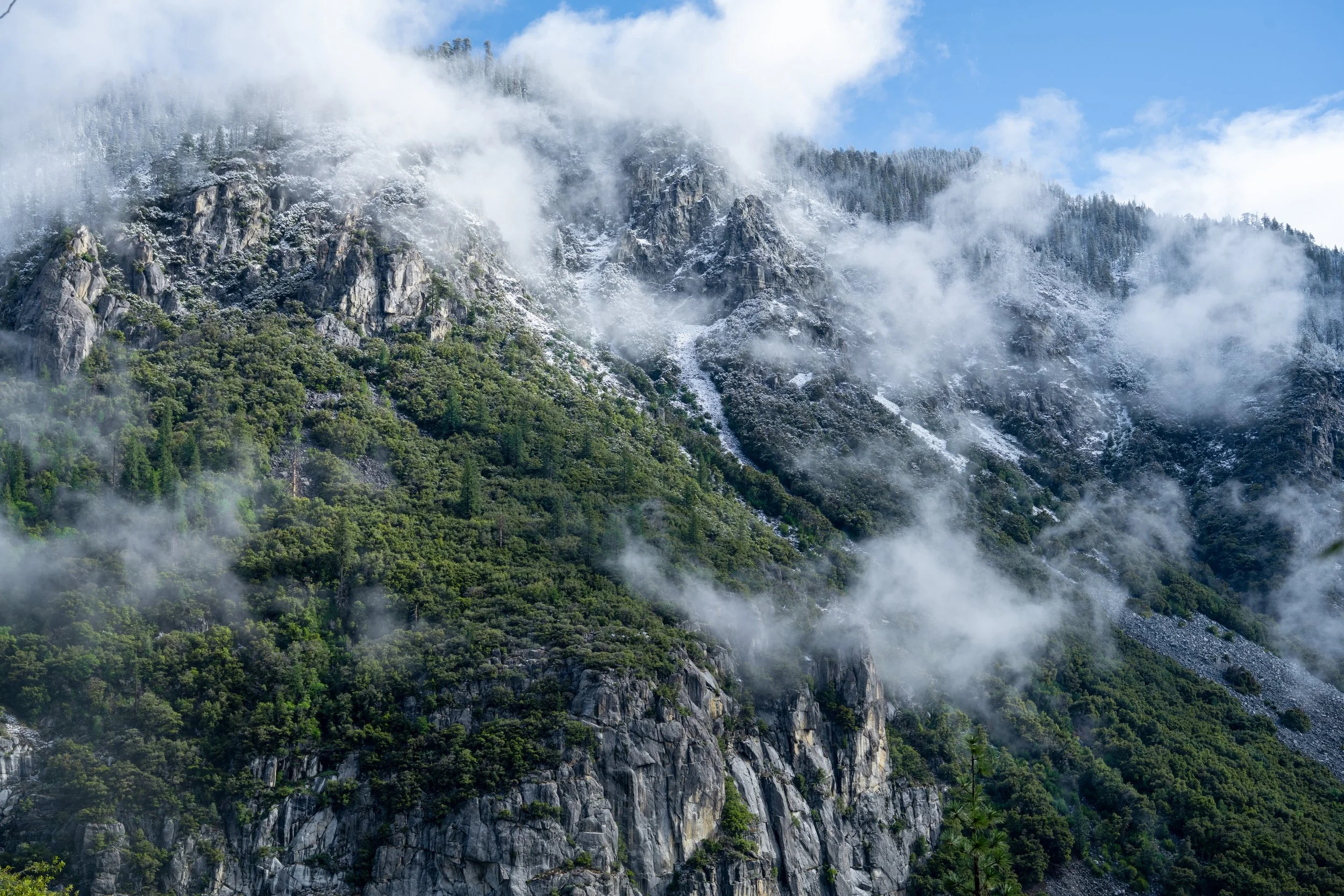
I was fairly confident I had all of the main obstacles figured out, but in the eleventh hour mother nature threw another challenge at me: road closures. Hwy 140 is the lowest elevation road into the park and typically don’t require snow chains during winter storms. However, it had been preemptively closed by Caltrans before the storm due to recent rockslides. That left Hwy 120 as the next best option. The Northern Yosemite Highway, as 120 is nicknamed, climbs to about 6300 ft before dropping to the valley floor. It’s the highest-elevation approach to the park from the west and almost certainly requires chains during winter storms. Just as I was about to leave my apartment on the evening of the 21st, I checked the road conditions hotline and found that Hwy 120 was temporarily closed due to heavy snowfall. That left Hwy 41 as the only option — an hour-long detour.
I left an hour earlier and resigned myself to the long the drive, but just as I had to make the decision whether to drive south towards Fresno or stay on 120, the latter reopened. It rained fairly heavily in the foothills which transitioned to snow near the 120 entrance gate. I was the only car on the road and the snow wasn’t sticking to the ground, but I still had to don my snow cables. Driving 15 miles with snow cables is excruciatingly slow and the main reason why I usually opt for Hwy 140 in the winter.
Finally, at 3:15 AM I arrived at the Tunnel View trailhead. There looked to be thick clouds in the valley but it was so dark that I couldn’t tell whether the sky itself was clear or not. I got maybe 15 minutes of sleep before trudging up the trail at 4 AM. My ill-fated attempt to do this same hike back in February resulted in failure after a record-breaking storm dumped four feet of snow in the valley. This time, the trailhead was clear of snow and conditions couldn’t be more perfect. Very patchy snow began around 4800 ft and continuous snow cover around 5600 ft. I had made it to this point in about 50 minutes and figured I’d get to the top with plenty of time to spare.
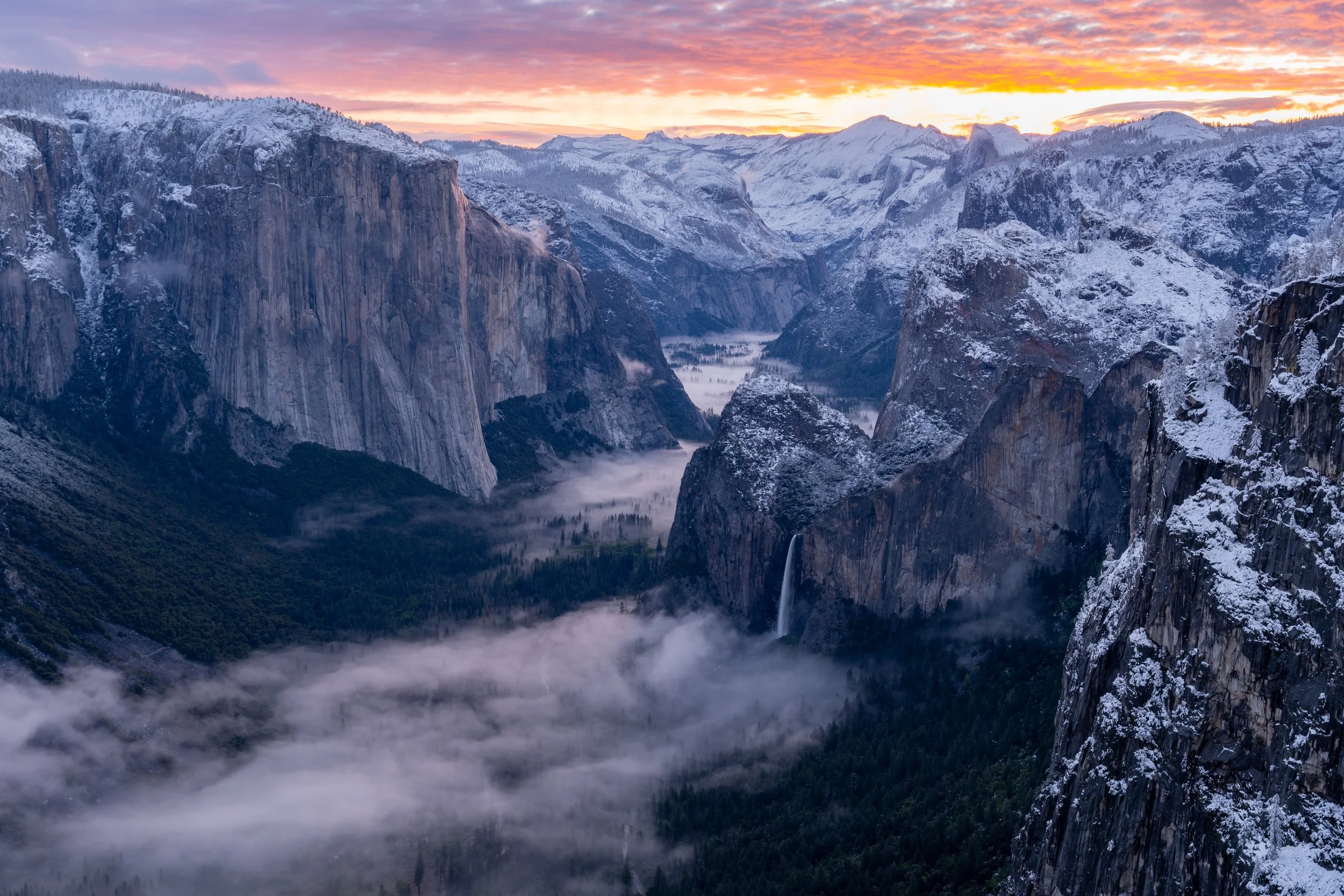
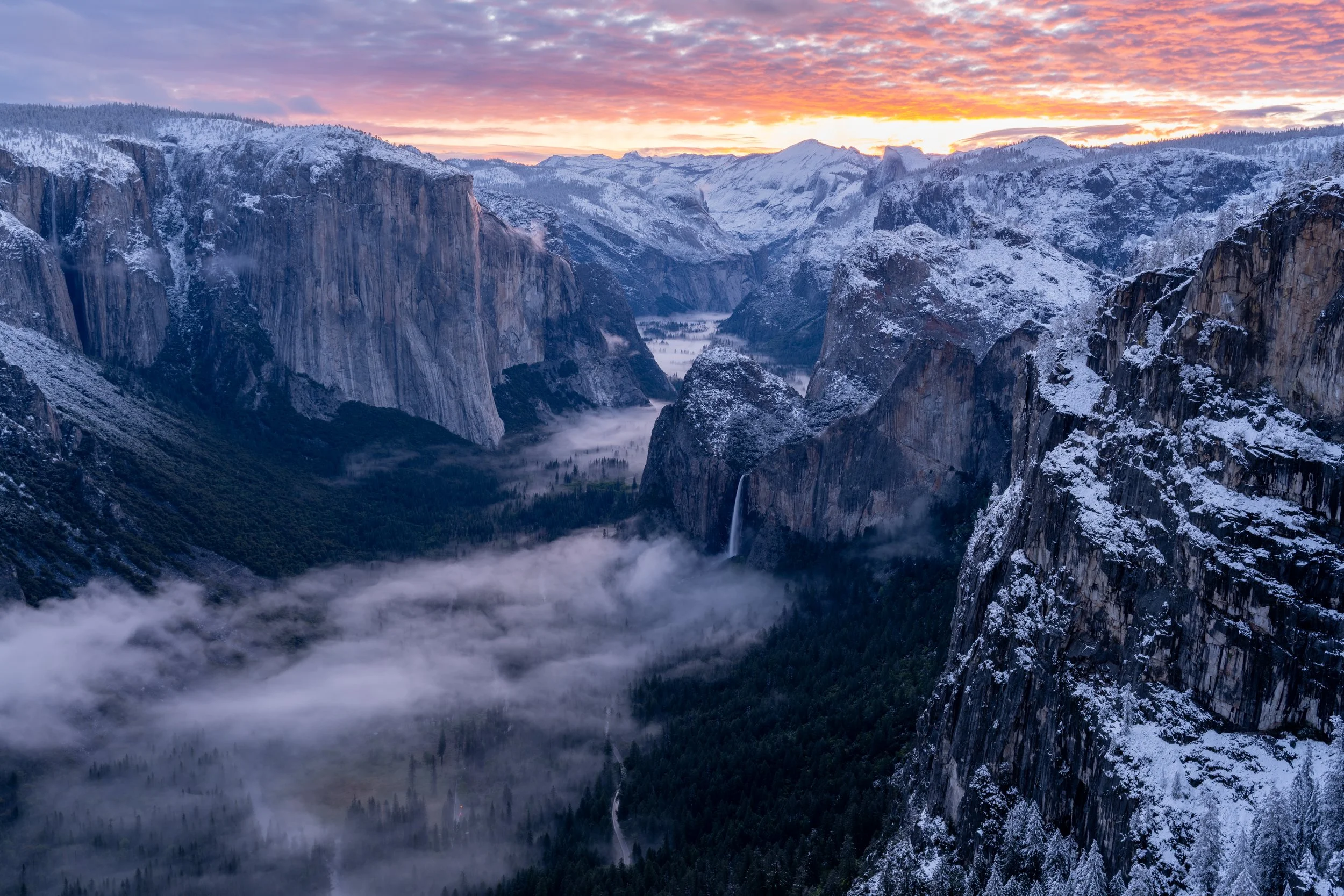
Triumphant sunrise over Yosemite Valley after a spring storm dropped snow in the Sierra.
The snow was maybe 6-8 inches deep higher up, which slowed me down considerably. I somehow made it to the viewing point right at sunrise and was treated to the most vibrant colors painting the high clouds with complete fog coverage on the valley floor. I’m not sure I could’ve asked for better conditions. The sun couldn’t quite penetrate the high clouds to light up El Capitan, but the pink and orange light show more than made up for it.
I spent maybe 2 hours taking photos and just watching the clouds swirl around. It was an uncharacteristically cold spring morning so the fog was slow to dissipate. The views weren’t even diminished when the sun rose above the clouds and shined directly into my face, casting the Brothers in shadows that contrasted harshly with the bright sunlight.
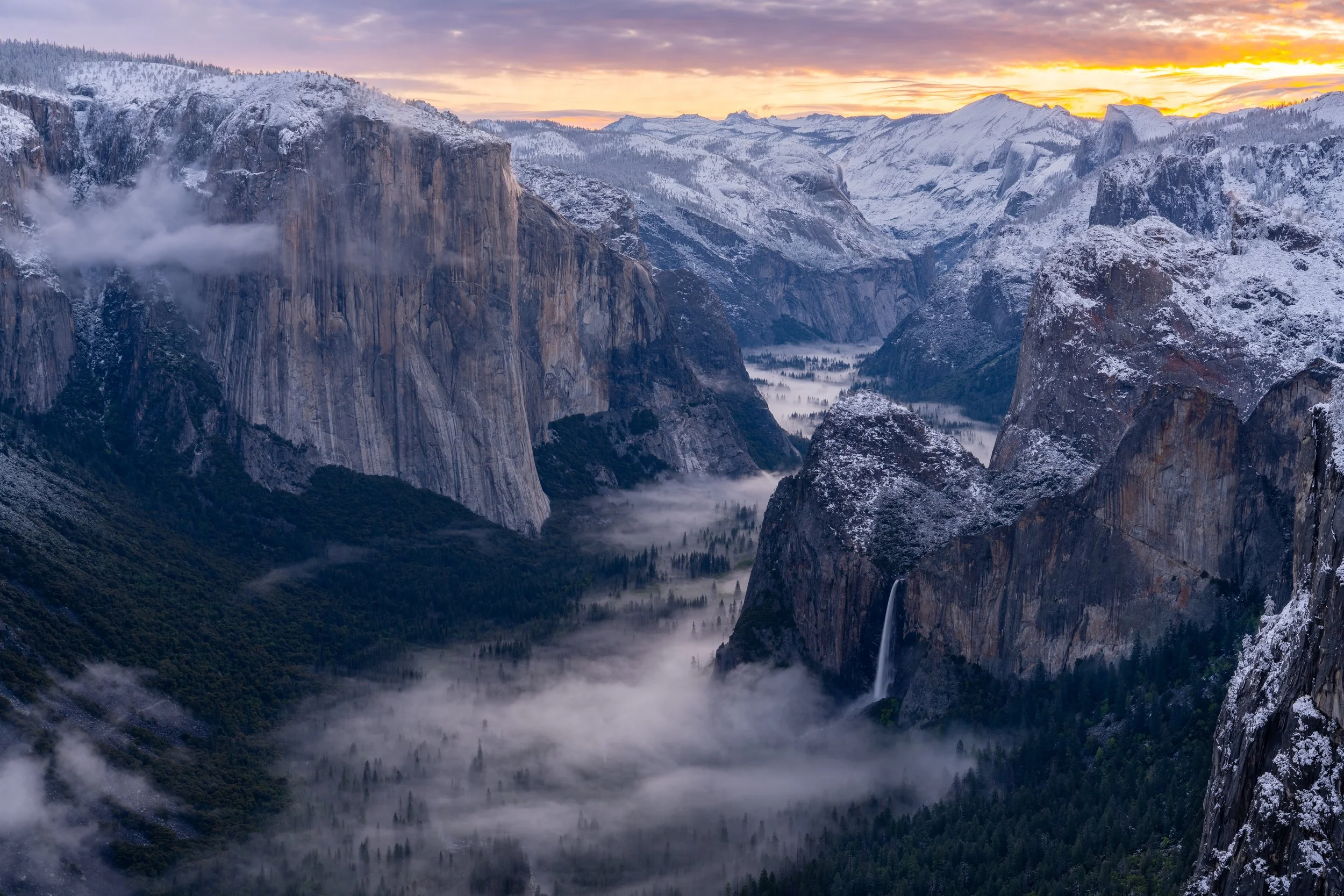
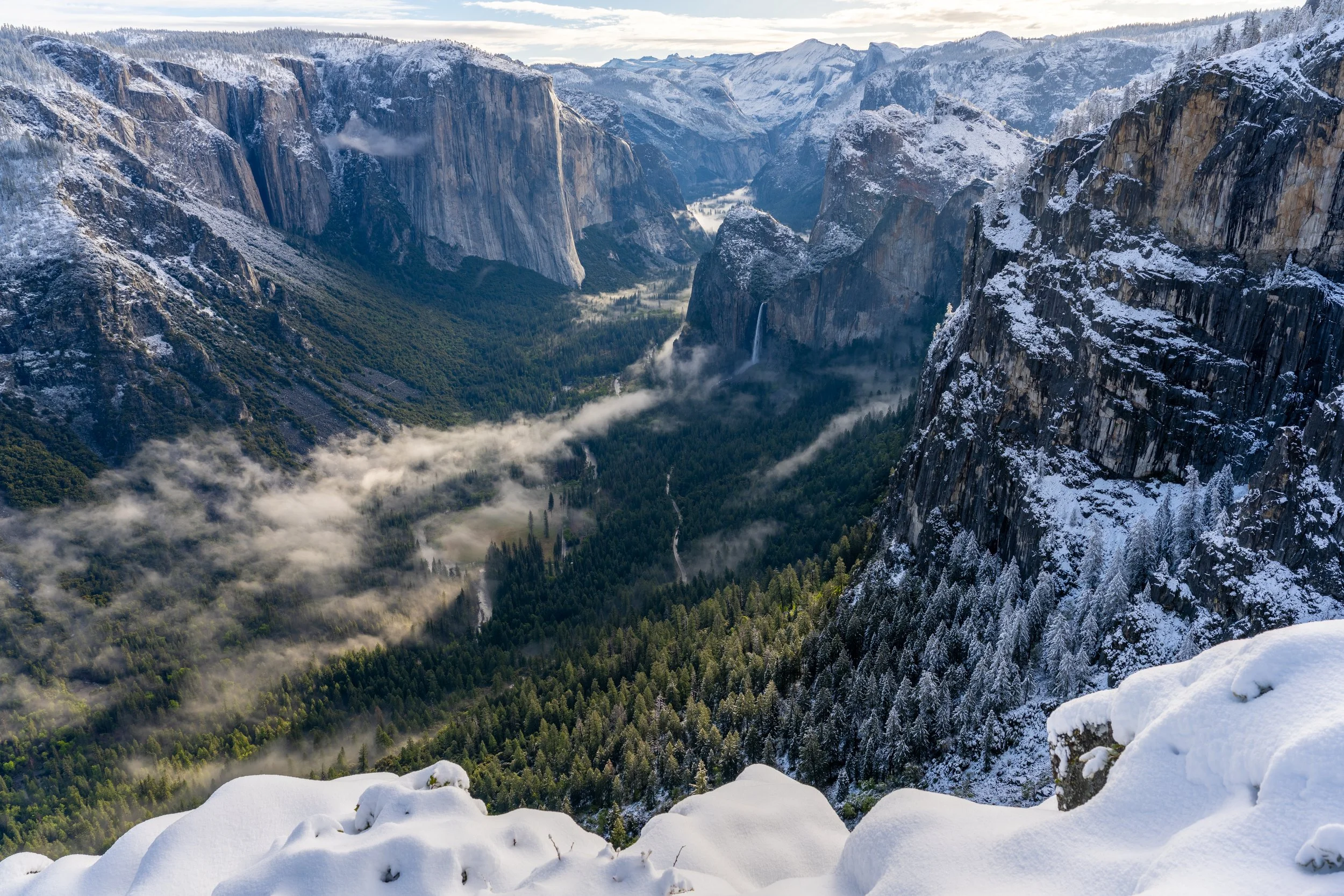
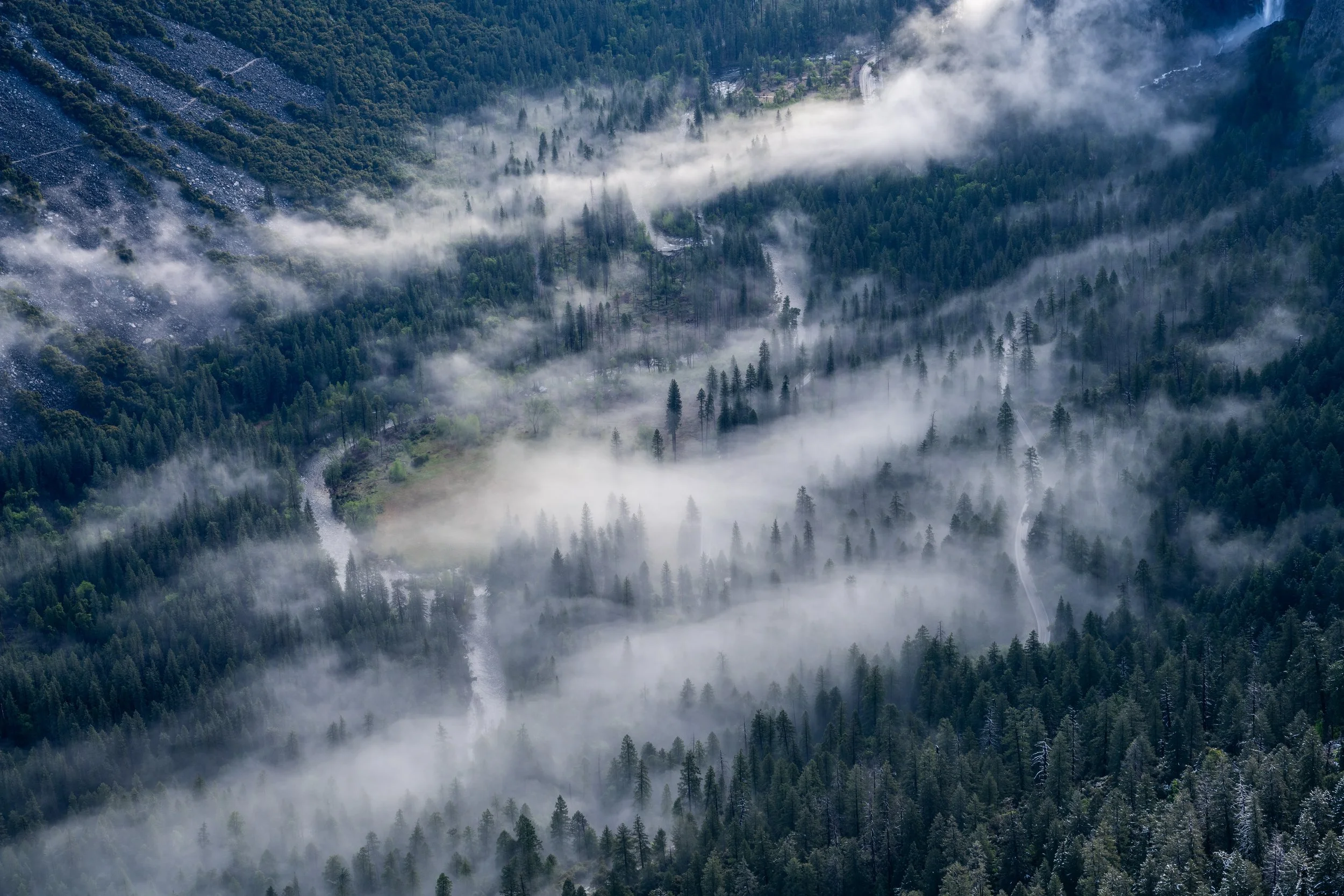
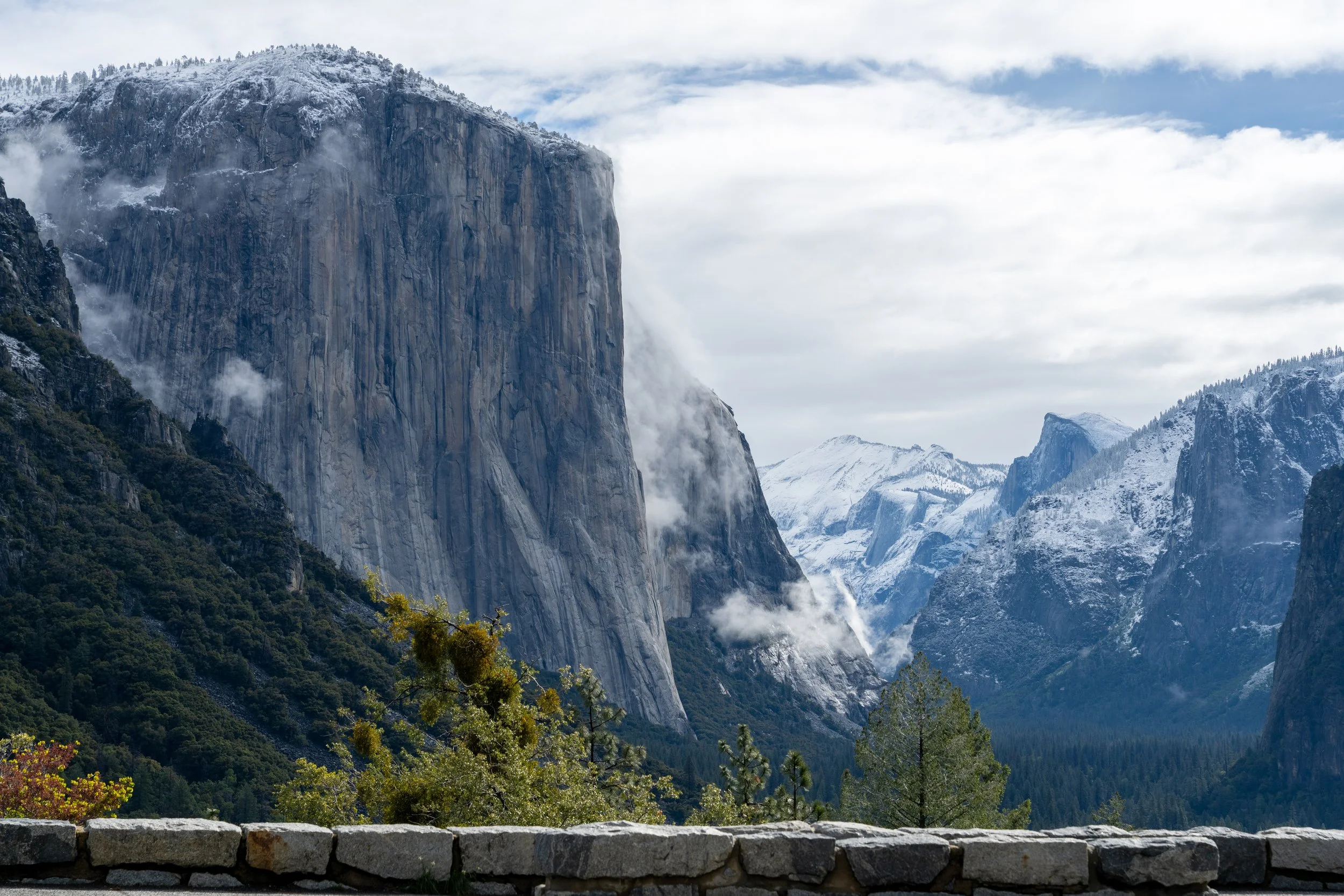
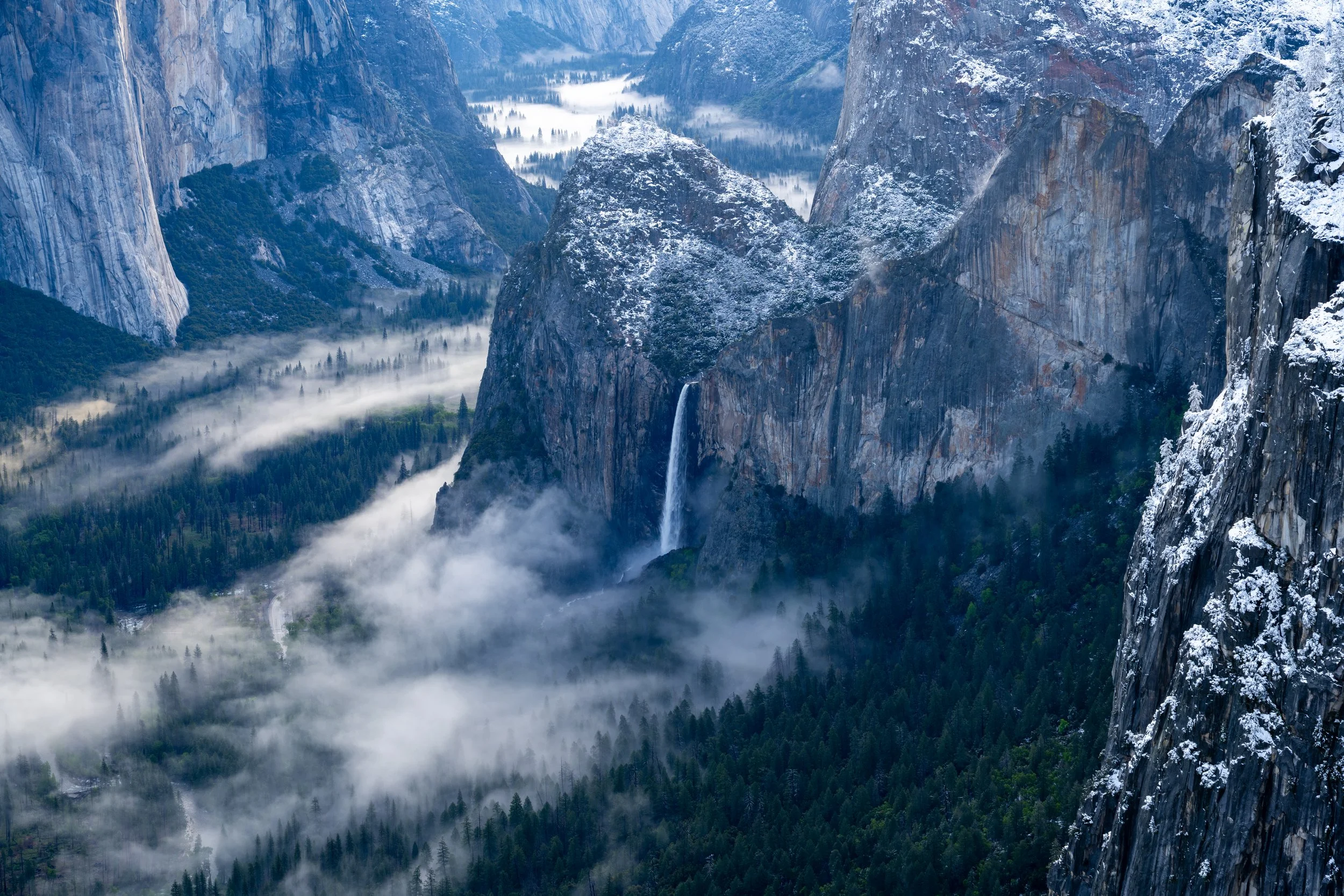
At 8 AM, I began packing up and debated continuing all the way to Dewey Point along the south rim. I’ve been up there in drier conditions but never after a fresh storm. Unfortunately, I found myself too tired (running on 15 minutes up sleep the night before and then 5 hours the night before that one…) to ascend more. I followed my boot track back to the trailhead and was surprised that not a single hiker came up behind me. Even Tunnel View had maybe a dozen or two cars at most. Chain control was lifted over 120 earlier in the morning so I made much better time getting back to the Bay Area.
A small part of me was worried I would start to get bored of the limited hiking options in winter after moving to California, but Yosemite is the gift that keeps on giving.
—Justin
